← Thank you for stealing the Mona Lisanorville

Marcel Duchamp and the Creative Act

Duchamp spent most of his career arguing that the artist doesn’t get the last word.

Marcel Duchamp was a French artist, born in 1887, who made a habit of poking at things the art world thought were settled. His Nude Descending a Staircase caused a scandal at the 1913 Armory Show in New York. In 1917 he signed a store-bought urinal “R. Mutt,” called it Fountain and submitted it to an exhibition. He called pieces like that readymades, ordinary objects that became art because an artist picked them.
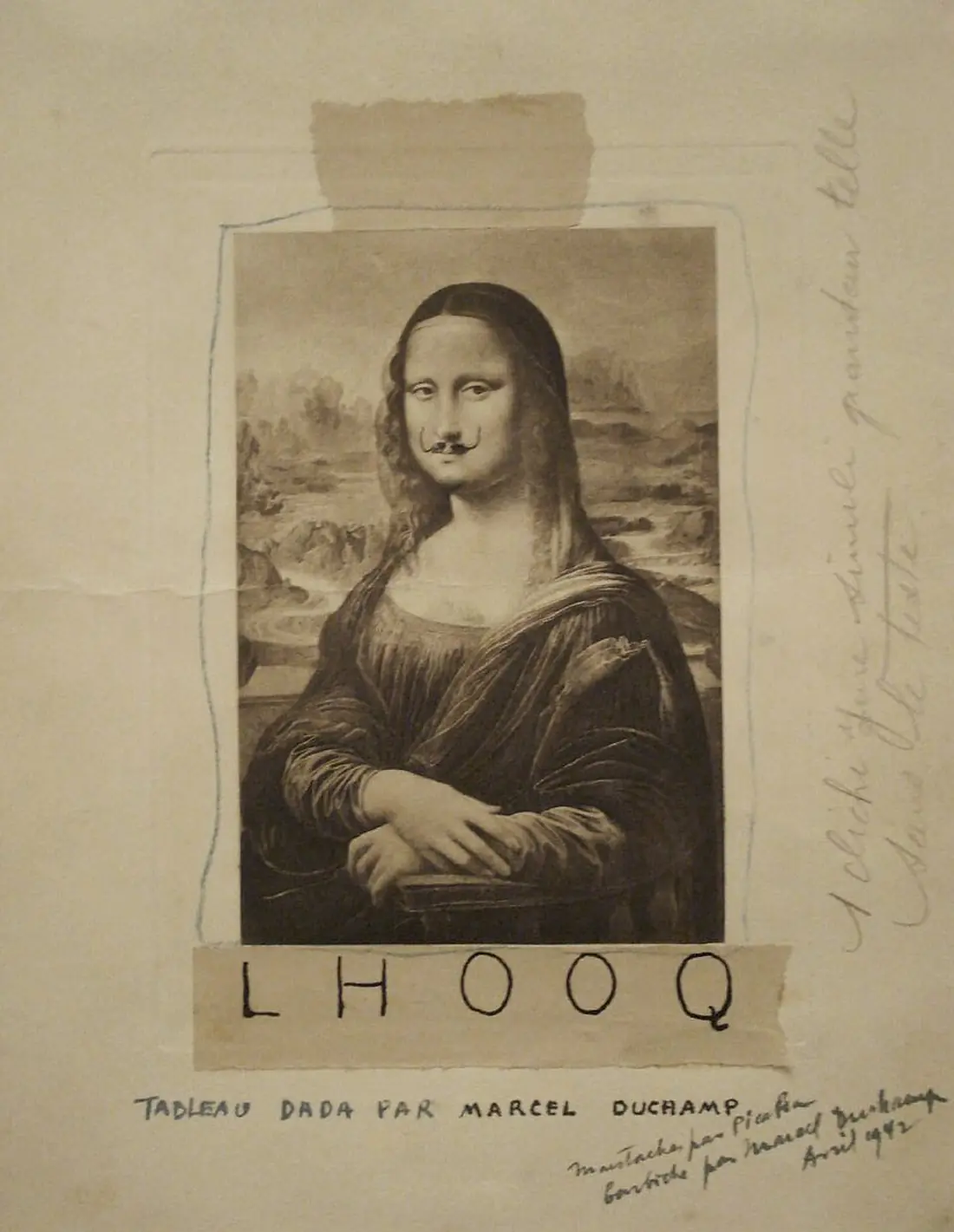
L.H.O.O.Q.

Marcel Duchamp’s L.H.O.O.Q.: a postcard of the Mona Lisa with a pencil mustache and goatee, the letters L.H.O.O.Q. underneath
Marcel Duchamp, L.H.O.O.Q.Rectified readymade, 1919

In 1919 he took a cheap postcard of the Mona Lisa, drew a mustache and a goatee on her and lettered L.H.O.O.Q. underneath. Say the letters out loud in French and you get a dirty joke. It was a small act of vandalism against the most respected portrait in the world, and it’s why every Mona in this project has those five letters on the bottom rail.

The Creative Act

In April 1957, near the end of his life, Duchamp gave a short talk in Houston at a convention of the American Federation of Arts. He called it “The Creative Act.” It runs about two pages.

His argument was that the artist never fully controls what a work ends up being. There’s always a gap between what the artist meant to make and what actually got made, and he gave that gap a name, the art coefficient. Somebody else has to close it.

That somebody is the spectator. People look at the work, argue about it, decide what it’s worth, and in doing that they finish it. As he put it, the creative act “is not performed by the artist alone.”

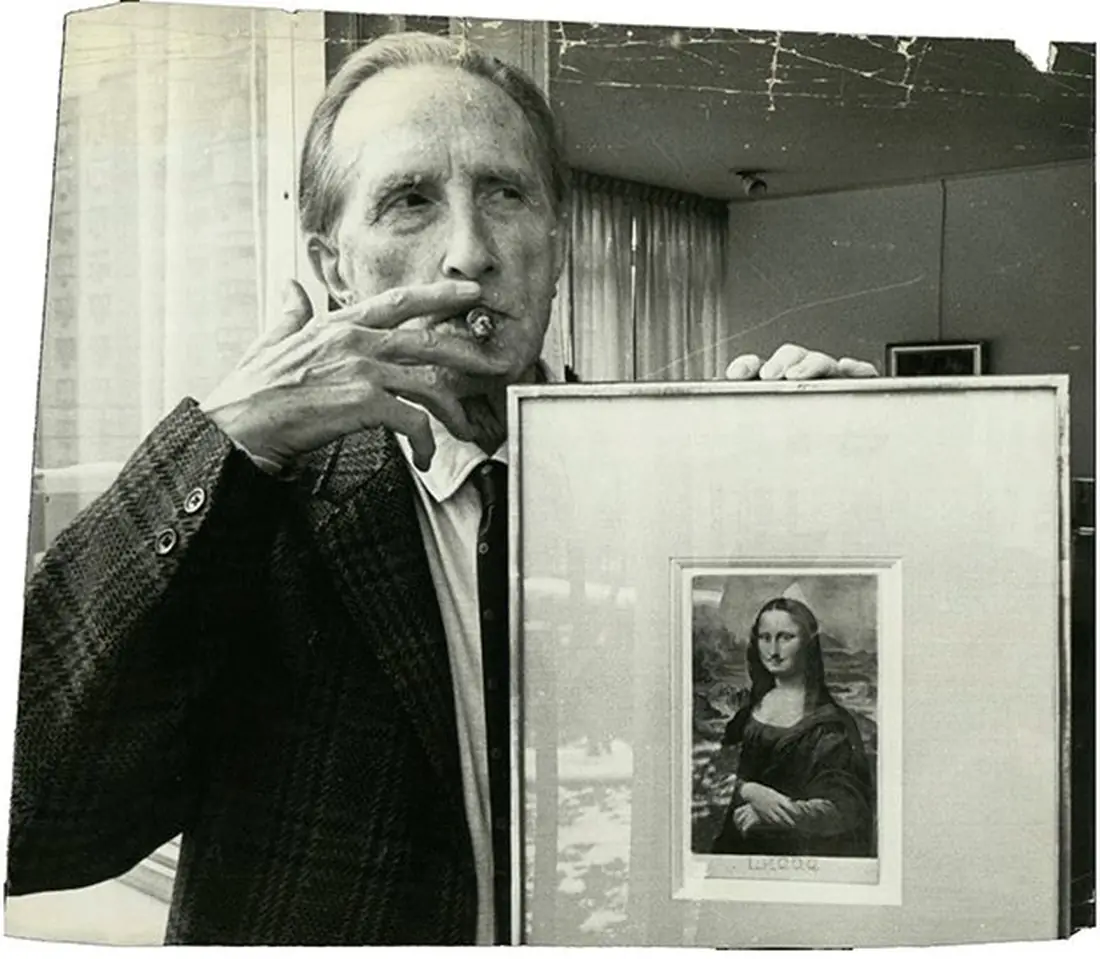
Marcel Duchamp holding a framed copy of L.H.O.O.Q.
Duchamp with L.H.O.O.Q.Holding a framed copy of the 1919 postcard

One step further

This project takes his idea one step further. A viewer who looks and interprets still walks away and leaves the piece on the wall. Here the viewer has to become a collaborator.

Somebody has to decide to lift the frame off its hook and carry it out. That decision is the part of the work I can’t do myself, and it’s the reason the label on every Mona has two names on it, with one left blank.

If you took one, the blank is yours. I like to think Duchamp would have enjoyed that the finishing touch is a small theft.